60 DAYS RETURN POLICY
FAST WORLDWIDE SHIPPING
How to use and clean a stainless steel pan: The complete guide
How to use a stainless steel pan
Stainless steel has no non-stick coating, so what stops food from sticking is temperature and fat. When a properly preheated pan meets cold food, a thin layer of steam forms and the food releases naturally. Most sticking problems come from a pan that's either too cold, or from moving the food too early.
Step by step: how to cook in a stainless steel pan
- Preheat the empty pan
Place your stainless steel pan on medium heat for 2–3 minutes. Stainless steel pans with an aluminium or copper core spread heat well, so there's rarely any need to go straight to maximum. - The water test
Flick a few drops of water into the pan. If they sizzle and evaporate, it's not ready. If they form a ball that skates around the surface like mercury, the pan is at the right temperature. - Add the fat
Wipe out any water, add oil or butter and let it heat for a few seconds until it shimmers. Use an oil with a high smoke point, such as rapeseed or sunflower oil, for searing. - Add the food – and wait
Lay the food in the pan and resist the urge to move it. At first it will stick, but once a crust forms it releases on its own. If it doesn't come away easily, give it another minute. - Adjust the heat
Once the food is in, you can usually turn the heat down a little. Stainless steel holds heat well.
A good tip is to let meat and fish sit at room temperature for 15–20 minutes and pat them dry before cooking. Cold, wet food lowers the pan's temperature and makes sticking more likely.
How to cook eggs in a stainless steel pan
Eggs are the classic stainless steel challenge, because they are high in protein and bond easily to steel. Here's how to get them right.
How to fry an egg in a stainless steel pan
Preheat the pan on medium, do the water test and add a generous knob of butter or a tablespoon of oil. When the butter stops foaming, crack in the egg and turn the heat down to medium-low. Let it set for a minute or two without touching it. Once the white is firm at the edges, it will release – slide a thin spatula underneath and serve, or flip it for over-easy.
How to cook scrambled eggs in a stainless steel pan
Scrambled eggs need a gentler hand. Preheat the pan on medium-low, add plenty of butter and pour in the whisked eggs once the butter has melted. Stir slowly and continuously with a silicone or wooden spatula, and take the pan off the heat just before the eggs look finished – they'll carry on cooking. The constant movement stops the eggs from bonding to the surface.
How to cook steak in a stainless steel pan
This is where stainless steel really shines. It gets properly hot and creates a deep, flavourful crust.
- Take the steak out of the fridge 20–30 minutes before cooking, pat it dry and season with salt.
- Preheat the pan on medium-high until the water test passes, then add a thin layer of high smoke point oil.
- Lay the steak in the pan, away from you. It will stick at first – leave it alone for 2–4 minutes until it releases by itself.
- Flip and cook the other side. Towards the end, add butter, garlic and thyme and baste the steak with a spoon.
- Let the steak rest for 5 minutes before slicing – and use the pan to make a sauce.
How to make a stainless steel pan non-stick
You can't make stainless steel truly non-stick like a coated pan, but you can come very close. The recipe is simple: a hot pan, then oil, then food. Add a thin seasoning layer (see below) and you'll have a surface where even eggs slide around freely. Avoid adding food while the oil is still cold, and don't overcrowd the pan – too much food at once drops the temperature and causes steaming and sticking.
Do you need to season a stainless steel pan?
No – unlike cast iron and carbon steel, stainless steel doesn't need seasoning. Unlike cast iron, stainless steel is not porous, meaning oil does not permanently bond to it. It is, however, possible to create a temporary layer of seasoning for cooking delicate items like eggs or fish, but it washes away with soap and needs to be repeated or maintained through proper heating.
How to season a stainless steel pan
- Wash and dry the pan thoroughly.
- Heat it on medium for 2–3 minutes.
- Add about a tablespoon of neutral oil with a high smoke point and swirl it to cover the bottom and sides.
- Keep heating until the oil just begins to smoke, then take the pan off the heat and let it cool.
- Wipe out the excess oil with kitchen paper, leaving a thin, shiny film.
The same method works for a stainless steel frying pan, sauté pan or wok. Keep in mind that seasoning on stainless steel is temporary – it wears off when you scrub the pan with detergent – so repeat whenever you feel it's needed
How to deglaze a stainless steel pan
The brown bits left in the pan after searing – known as fond – are packed with flavour. Deglazing turns them into a quick pan sauce, and it makes cleaning easier, too.
- Remove the meat and pour off most of the fat.
- With the pan still hot, pour in a splash of liquid: wine, stock, a little vinegar or even water.
- Scrape the bottom with a wooden spatula as the liquid bubbles, until all the brown bits have dissolved.
- Let it reduce, then finish with a knob of cold butter for a glossy sauce.
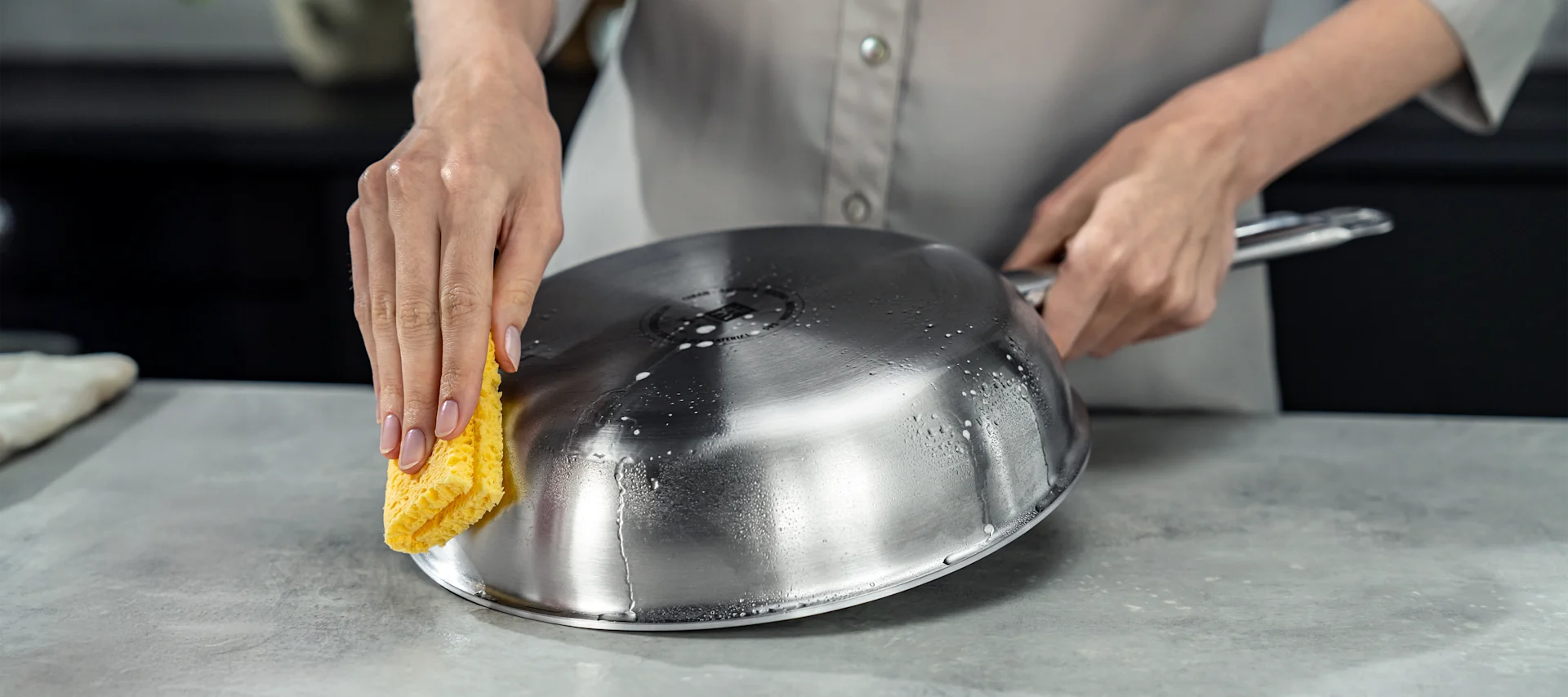
How to clean a stainless steel pan
- For everyday cleaning, stainless steel is easy to look after:
- Let the pan cool slightly – plunging a very hot pan into cold water can cause it to warp.
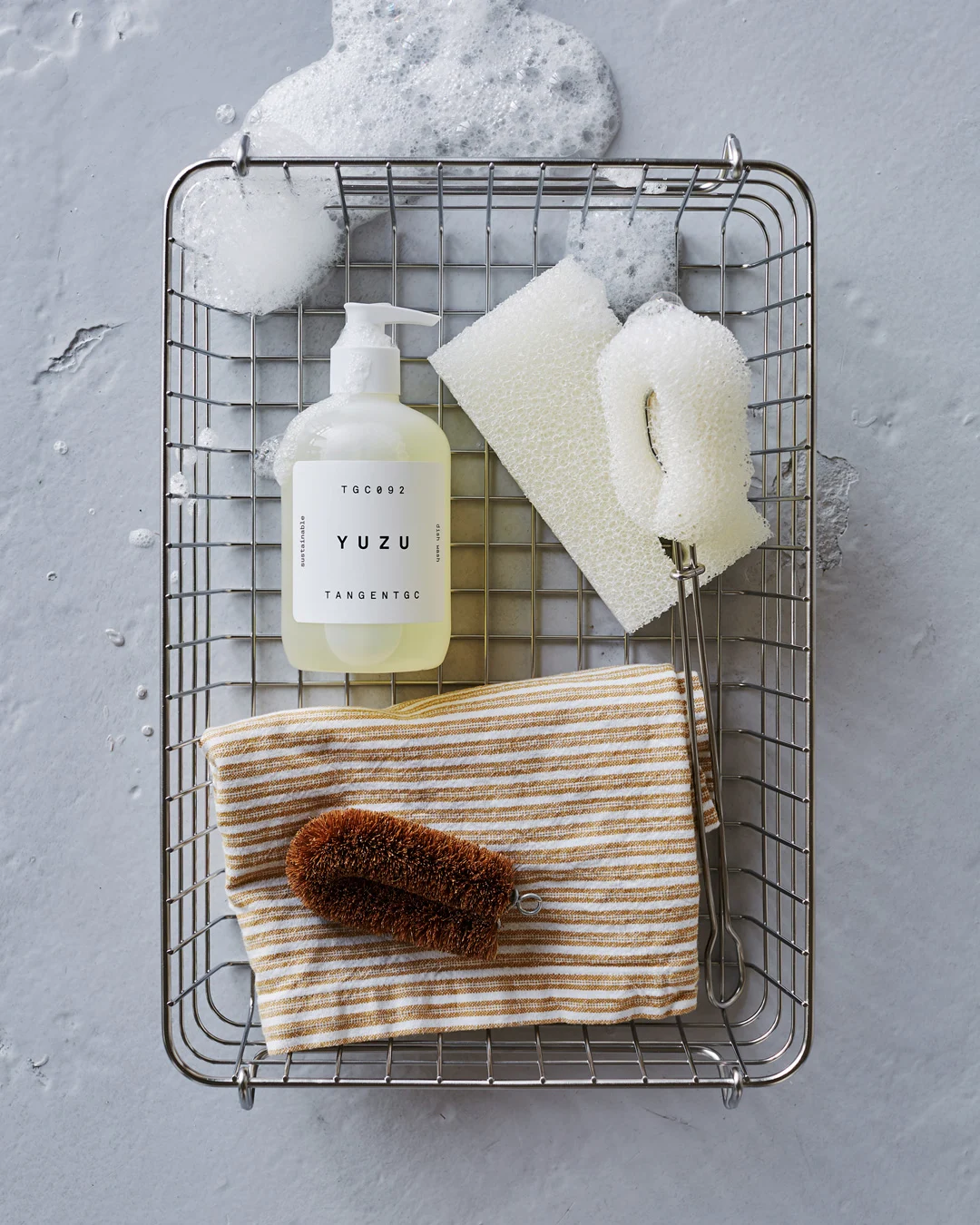
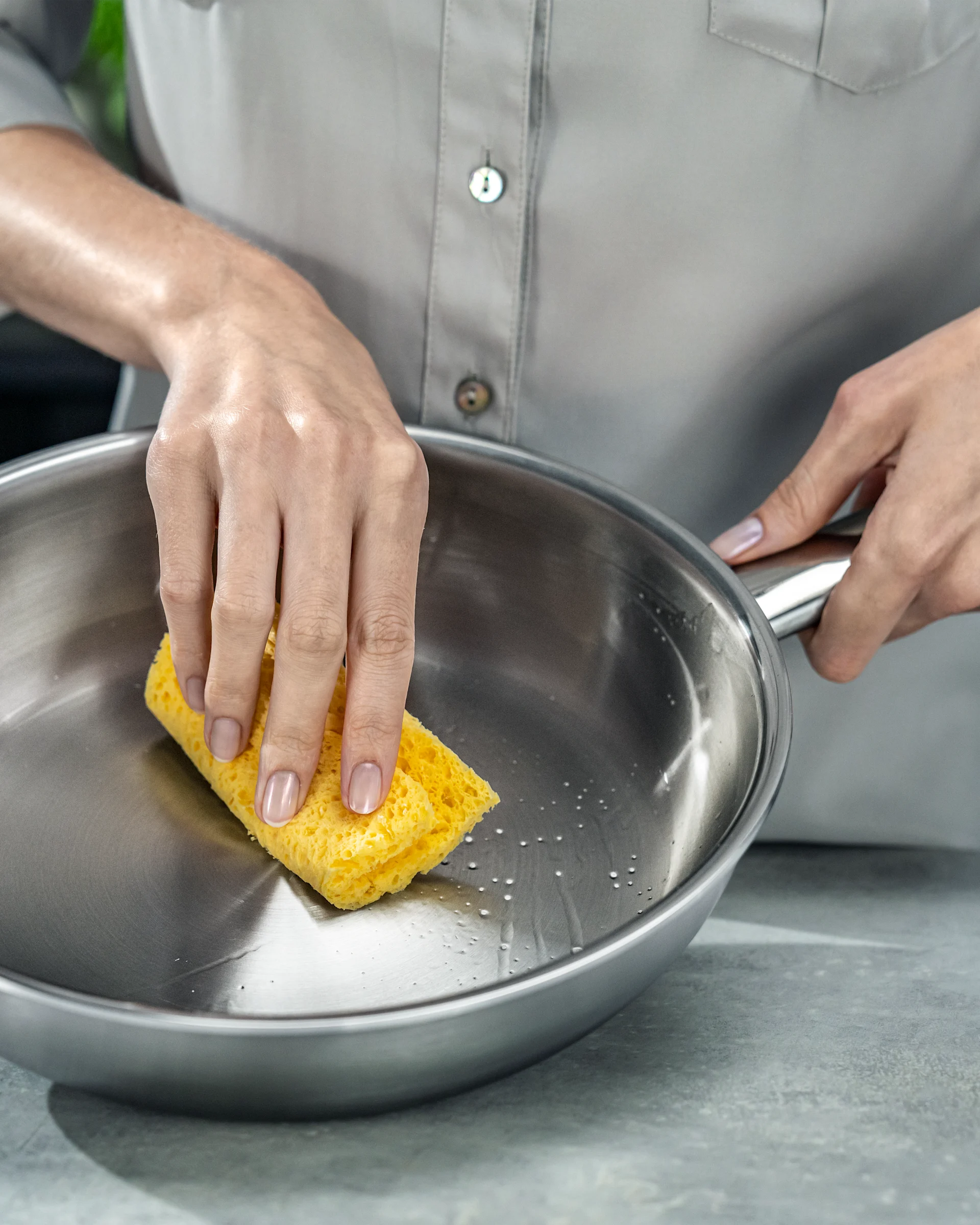
- Wash it with warm water, washing-up liquid and a soft sponge or brush.
- If there's stuck-on food, fill the pan with warm soapy water and let it soak for 15–30 minutes before washing.
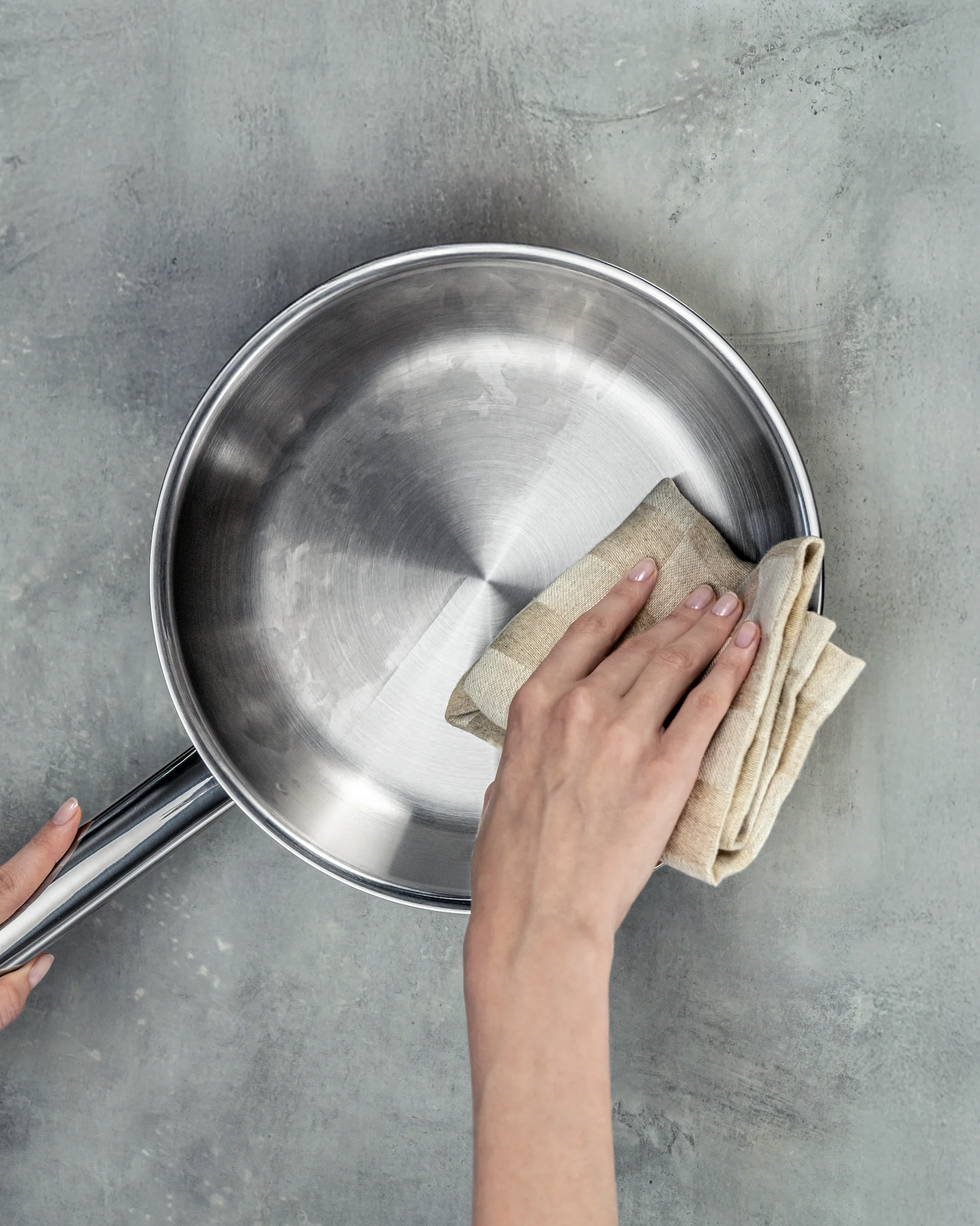
- Dry the pan straight away with a tea towel to avoid water spots.
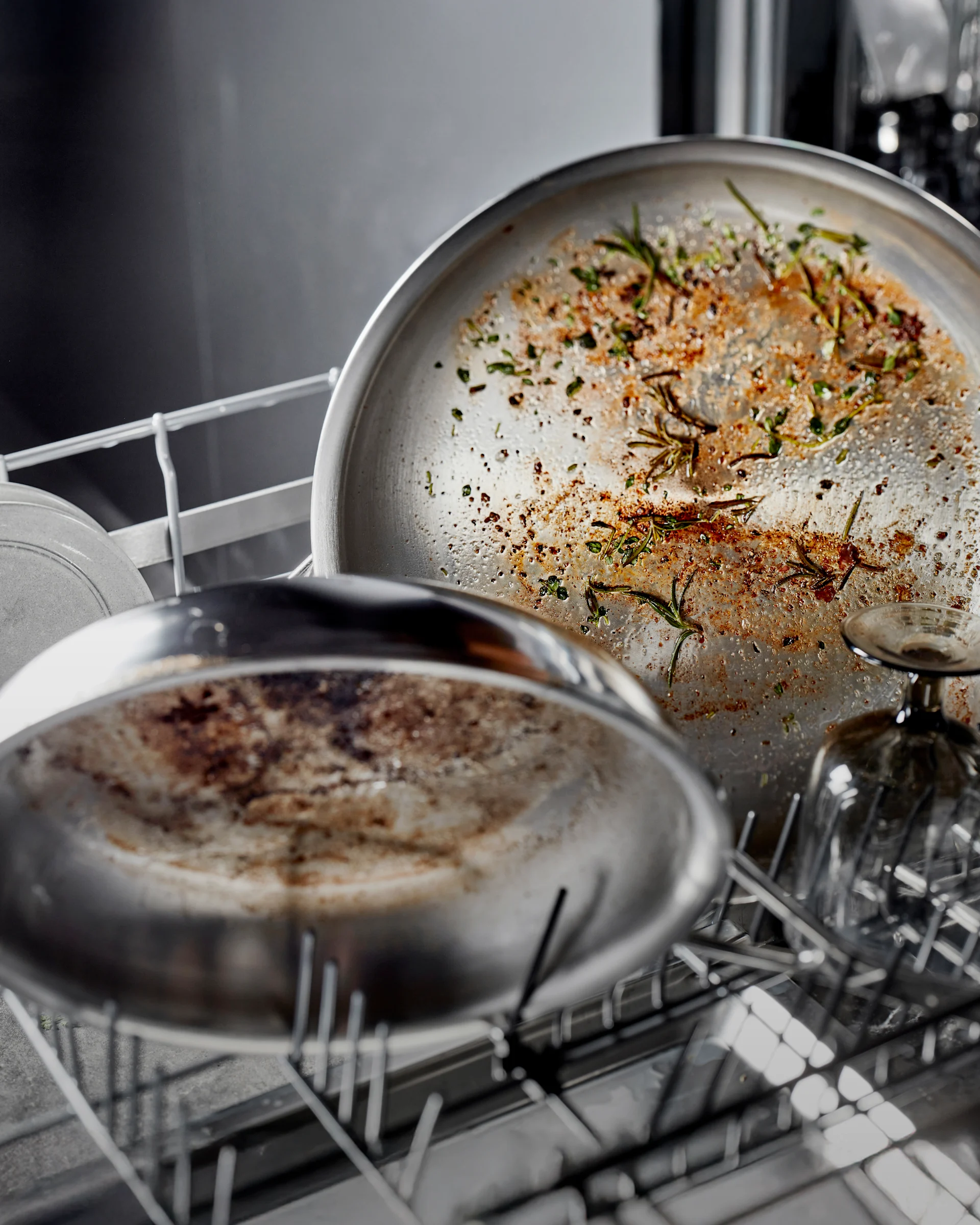
Many stainless steel pans are dishwasher-safe, but washing by hand keeps them looking better for longer – especially pans with a polished finish.
Tips for cleaning a burnt stainless steel pan
Burnt food and oil in your favourite pan might look alarming, but stainless steel can handle a firm clean. Try these methods, starting with the most gentle:
- Boil with baking soda
Cover the bottom with water, add 1–2 tablespoons of bicarbonate of soda and bring it to the boil. Let it simmer for a few minutes, then scrape the loosened residue away with a wooden spatula. This works well for burnt food. - Baking soda paste
For burnt oil and brown, sticky residue, mix bicarbonate of soda with a little water or even oil to make a paste. Spread it over the stains, leave it for 15–30 minutes and scrub with a non-scratch sponge. - Stainless steel cleaner
For stubborn burn marks, use a cleaner made for stainless steel. Rub in the direction of the grain, then rinse thoroughly. - Vinegar for discolouration
Rainbow-coloured stains (heat tint) and white chalky spots from hard water disappear with a splash of white vinegar. Wipe it over the surface or simmer a little diluted vinegar in the pan, then rinse and dry.
Avoid steel wool and harsh scouring pads on the cooking surface, as they can leave scratches that make food more likely to stick.


FAQ
Why does everything stick to my stainless steel pan?
Can I use metal utensils on stainless steel?
Can I use a stainless steel pan on an induction hob?
How long does a stainless steel pan last?
Related products
